-
NEWS
 HENRY CLEMENS VAN DE VELDE AND RIGA. Exhibition in Riga Art Nouveau Museum
On display until September 15, 2013
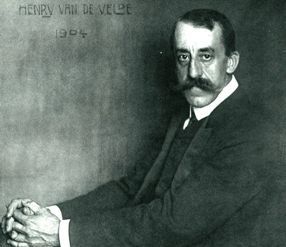
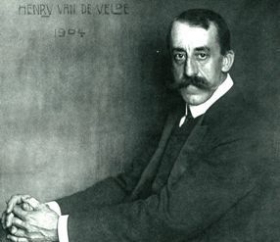
On 3 April 2013 the 150th anniversary of the birth of Henry Clemens Van de Velde was celebrated. He was an internationally acclaimed Belgian painter, designer, graphic designer, thinker, teacher and architect. His most eminent quality was a talent to give a fresh life to art and beauty, which are in fact essential elements of life.
In 1910, when he was 47, he was invited to enter an architectural competition for the creation of a parsonage and inclusive housing in Riga. At that time Van de Velde, who was then working at the school in Weimar that later became the renowned Bauhaus School of Architecture, was experiencing a swing in his approach of architecture. The Riga project would have remained a minor occurrence, if it had not popped up twice in the myth surrounding Van de Velde. It is these two instances that have inspired this exhibition.The first time the Riga project appears is in a most famous photo showing the master at work in his Weimar studio while he is designing the plans of the parsonage.The second reference can be found in his Geschichte meines Lebens where he describes his trips to Riga as a typical example of an experience of cultural confrontation which has not yet lost its topical interest. The photos by Alnis Stakle on view in this exhibition try to illustrate this controversial story of ‘honest’ beauty which Van de Velde appealed to.Exhibition is created by Sampling, curator Manten Devriendt, photographer Alnis Stakle, work group: Liene Jākobsone, Kārlis Narkēvičs, Jonas Apers, Prof. dr. Maarten Van Den Driessche, Prof. dr. Dirk De Meyer, Riga Art Nouveau Centre.More information: www.jugendstils.riga.lv