-
NEWS
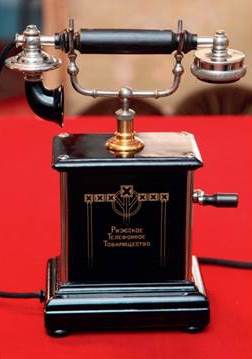
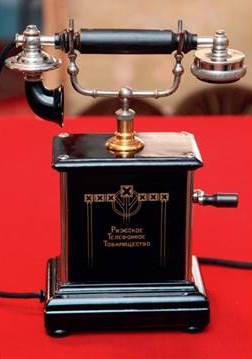 Exhibition “Telephones in Art Nouveau Age”
Until 24 April everybody is welcome to visit the exhibition “Telephones in Art Nouveau Age” in museum “Riga Art Nouveau Centre”
The exhibition presents desk telephone devices used in the territory of Latvia, mainly Riga, in the period from 1882 until the end of World War I.The developments in society, mindsets and art in the Art Nouveau period are closely related to scientific discoveries and development of technologies important part of which is the history of telephoning. In the exhibition the visitor is offered to learn more about one type – the desk telephone devices – of the Art Nouveau period.The exhibition is based on Valdis Hofmark’s private telephone device collection. The theme of the collection is telephoning in Latvia from its beginnings in 1882 to 1940. The exhibits have been collected over the period of 35 years and account for 140 telephone devices as well as photos that serve as the evidence for using the devices in Latvia as well as technical literature describing the equipment used in telephoning. The author of the collection has been a member of the Telephone Collection Society of Sweden (Sveriges Telehistoriska SamlarFörening, STSF) since year 1999.The exhibition features telephone devices used in the territory of Latvia until the end of World War I manufactured in the factories of L.M.Ericsson company in Stockholm and St.Petersburg. The telephone devices manufactured by L.M.Ericsson were prevalent in the period between 1901 and 1919 when the concession public telephone network installation was carried out by Riga Telephone Society not only in Riga, but also in Jurmala, Cesis, Valmiera, Valka and Viru.Besides public telephone networks there also were telephone networks for private use. The exhibition also features several telephone devices manufactured by German companies Siemens&Halske and Mix&Genest as well as Swedish company L.M.Ericsson, employed in private telephone networks or used for communication at home.The exhibits include several catalogues and technical literature authored by companies L.M.Ericsson and Mix&Genest as well as the the subscriber list of Riga Telephone Society for year 1907.