-
NEWS
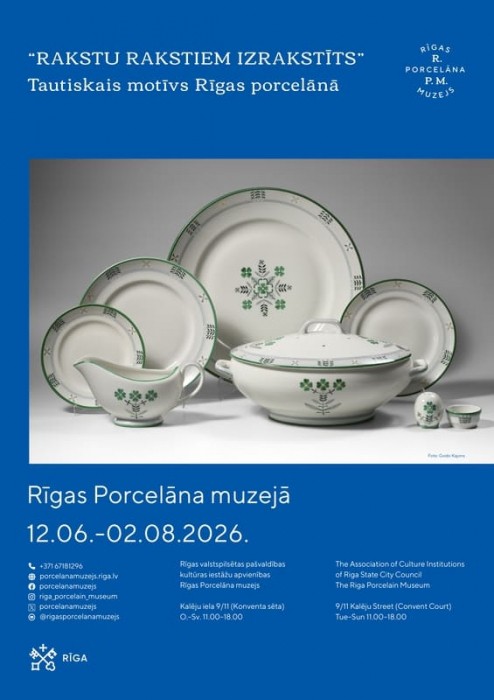
 Collection Exhibition “Written in Patterns” – Folk Motifs in Riga Porcelain
From June 12 to August 2, 2026, visitors to the Riga Porcelain Museum, located at Kalēju Street 9/11, will have the opportunity to explore folk motifs in the collection exhibition “Written in Patterns.”
The folk motif in Latvian porcelain art has been relevant since its very beginnings, yet its forms of expression and interpretation have varied greatly. The Riga Porcelain Museum’s collection exhibition focuses on the use of folk elements in porcelain objects created in the second half of the 20th century and in contemporary production.
Various factors in the second half of the 20th century contributed to the use of folk motifs in porcelain design. Ethnographic elements were often incorporated into the decorative design of elaborate representative objects. Their use was also widespread in souvenir production, serving as a representation of Latvian identity. At times, however, the popularity of these motifs was driven by broader fashion trends. In contemporary works, the presence of folk motifs is most often explained by the artists’ personal interest in ethnographic themes.
In a sense, the term “folk” can be used to describe a wide range of porcelain designs—from functional dinner, coffee, and tea sets, kitchenware sets, powder boxes, ashtrays, and flower vases to large-format decorative plates and vases created as unique art pieces in honor of national anniversaries and other significant events. A particularly notable category includes both historical and contemporary small-scale sculptural figures, widely featuring depictions of traditional Latvian maiden and young man figures.
The 1950s can be considered the “triumphal march” of the folk motif. Ethnographic patterns based on historical examples became highly relevant in applied arts and thus also appeared on mass-produced tableware, wall plates, and other ceramics. In the 1960s and 1970s, folk ornamentation was modernized and stylized, reflecting the era’s tendency toward conciseness in both form and decoration. In the 1980s and 1990s, the popularity of folk motifs was linked to sociopolitical processes—the Third Awakening and a return to symbols of Latvian identity such as the Auseklis star, which also appeared in porcelain design. Even today, several artists remain faithful to folk stylistics.
The works featured in the exhibition were created by well-known Latvian porcelain artists such as Zina Ulste, Ilga Dreiblate, and Beatrise Kārkliņa. At the same time, the exhibition also highlights the creative contributions of many other artists who worked in Riga porcelain factories. The forms and decorations they created are a vivid testimony to the flexibility of the folk style and its ability to adapt to different trends while maintaining a connection to Latvian cultural roots.
A valuable companion to the exhibition “Written in Patterns” is the latest publication of the Riga Porcelain Museum—the book Folk Motif by Toms Ķencis—which offers an in-depth look at many of the objects featured in the exhibition and analyzes the popularity of folk motifs in Latvian porcelain art within a broader cultural context. The publication is available for purchase at the museum’s ticket office.
Each visitor is invited to explore the stylistic and formal expressions of folk motifs across different periods and to ask themselves how interpretations of “folkness” have changed over time and what it means for the people of Latvia today.